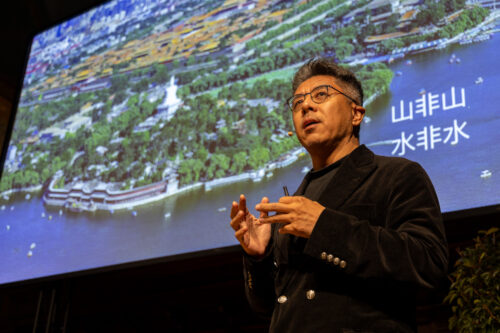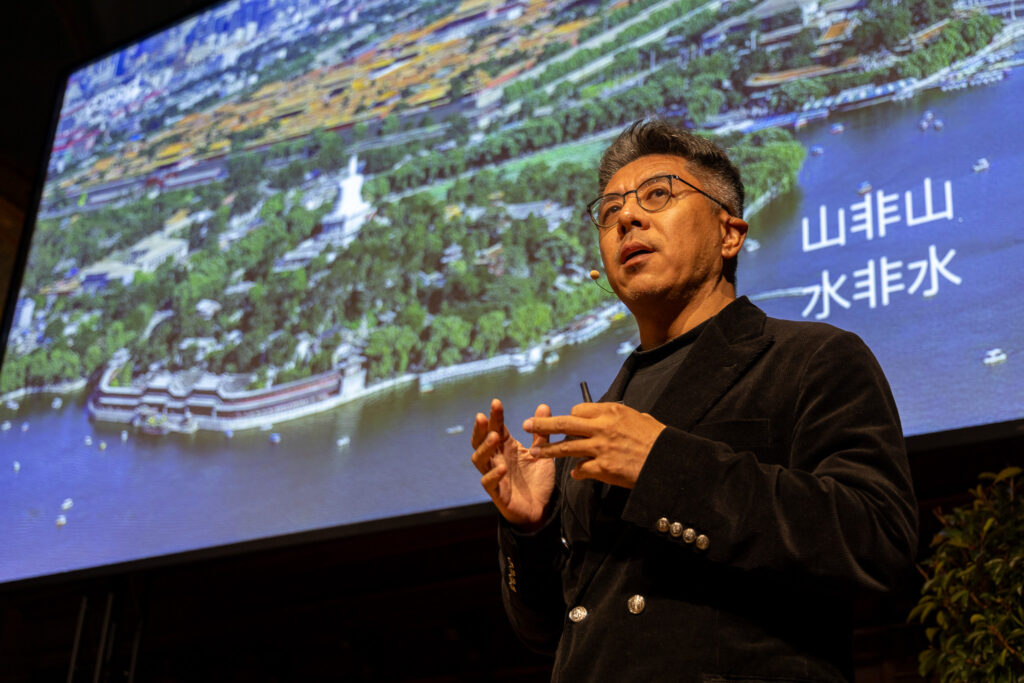

During the Perugia (Italy) stop leading up to the SEED Festival 2026, architect Ma Yansong shared his vision of organic architecture.
Ma Yansong, founder of MAD Architects and visiting professor at the Yale School of Architecture, is among the most influential voices in contemporary architecture: TIME Magazine has named him one of the 100 most influential people in the world. His work and research seek a balance between humanity, nature, and the city, standing in opposition to the modernist rationalism he considers dehumanizing.
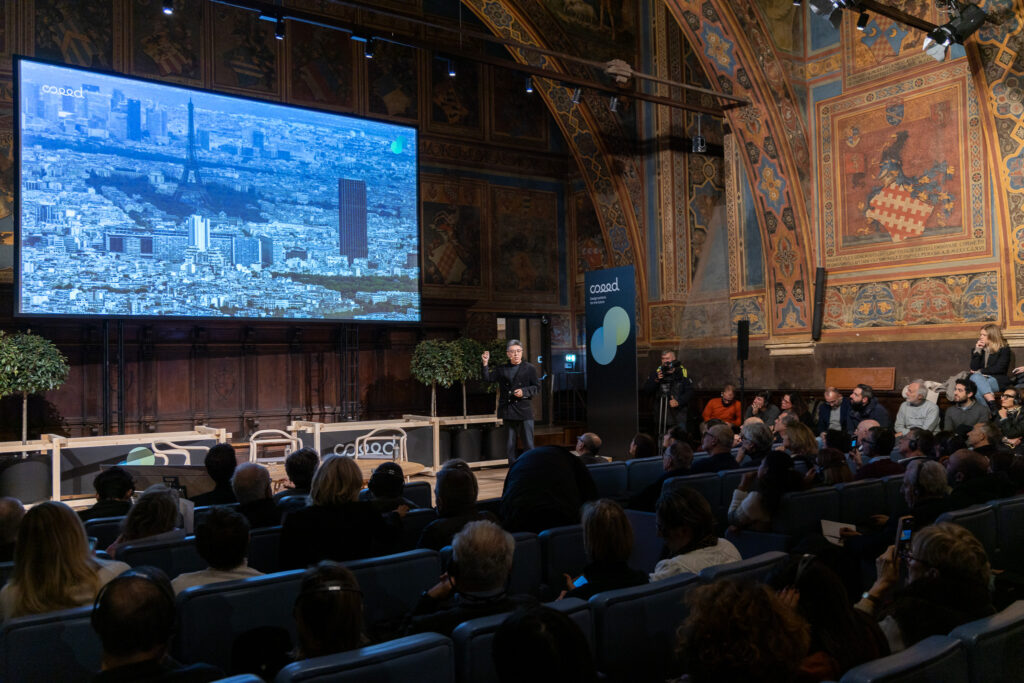
The past, Yansong reminds us, holds the key to shaping the future. Ancient cities knew how to converse with nature, to integrate it, to make room for it. Today, to restore that balance, we must return to the origin: back to the agora, to the domus, to that idea of home understood not merely as a physical place, but as a condition in which we feel part of the world. A home for humanity, a space where our shared sense of being can be recognized and carried forward.
Technology and architecture engage in a dialogue with the landscape, while urban spaces respond to the emotional and spiritual needs of their inhabitants. Imagining the future of cities means rethinking their relationship with the people who live in them and with the nature that surrounds them: a bond that has weakened, lost in the rush toward the new. Humanity becomes the invisible thread connecting every project to the lives of people, transforming the city into a living organism capable of welcoming, inspiring, and connecting those who inhabit it.
READ ALSO:
Architecture needs to be brought back to what it truly should be: not merely technical, but a narrative; not decoration, but a living organism. The fluid shapes of Yansong’s architecture seem sculpted by water and wind, as if the buildings were portions of the landscape, growing spontaneously and in harmony. Curves that evoke clouds, hills, canyons; smooth geometries like geological rocks; volumes that breathe, float, and move. Architecture should be understood as an extension of both nature and human emotion.
The first question an architect should ask themselves is: “How will people feel?”. Emotion becomes the starting point, the foundation of the project, the place where human experience takes root. We often fail to realize just how much our environments shape us: spaces, before being functional, are psychological, perceptual, and spiritual.
Communities must be revitalized through spaces that listen to them, embrace them, and foster deep connections.
From this thinking emerges his Emotional Nature Architecture: a vision in which nature is not a decorative element but an extension of the human spirit. A starting point can be found in China: in traditional gardens, it is never clear where the artificial ends and nature begins – the two coexist, participating in a poetic continuity. This is the perspective that guides Yansong’s projects: an architecture that does not imitate nature but absorbs its language.
Natural light, local and natural materials are used to create spaces that not only welcome, but speak to the soul of those who live in them, evoking tactile and visual perceptions that engage both body and mind. Space is never neutral: it shapes emotions and guides its inhabitants in a constant dialogue with themselves, with others, and with the world.
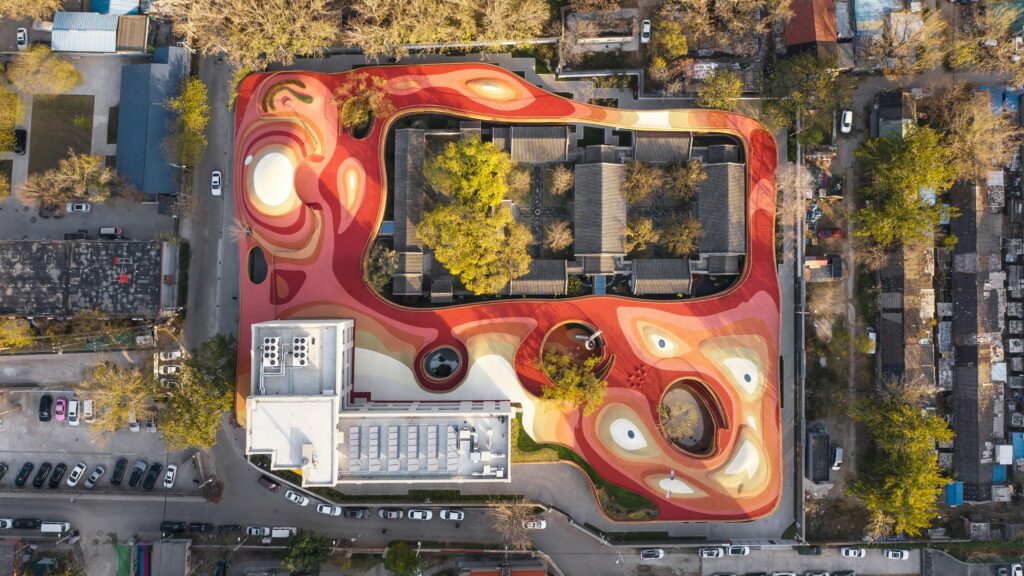
In Beijing, Ma projected the YueCheng Courtyard Kindergarten, where old and new seamlessly merge: an ancient building is enveloped by a colorful, flowing roof where children run and play among trees that become integral architectural elements. Here, nature is not only added, it takes center stage.
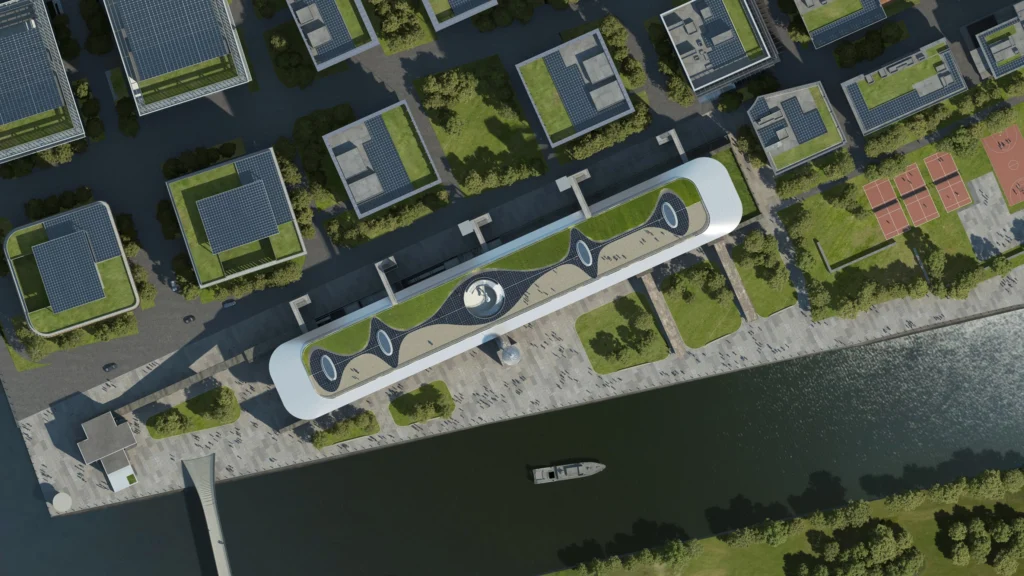
In Shanghai, The Ark transforms a natural rooftop into a major social device: a meeting point, a space for the community.
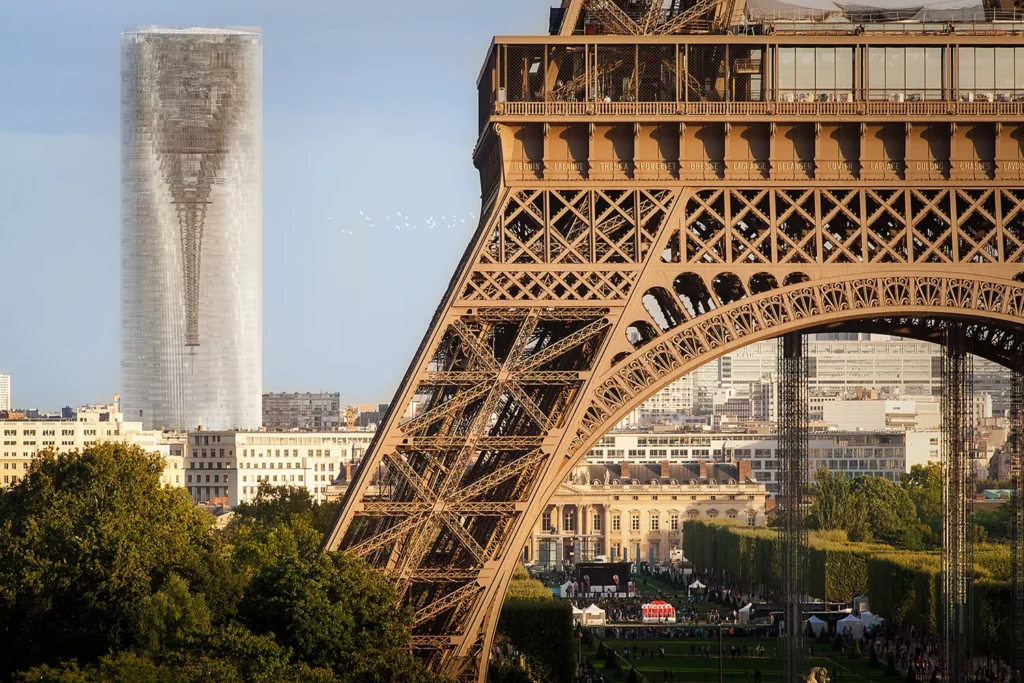
In Paris, reimagining the Tour Montparnasse, MAD Architects designed a massive urban mirror: each glass panel is angled to reflect streets, rooftops, the sky, and the Eiffel Tower – making the building almost disappear into the cityscape.
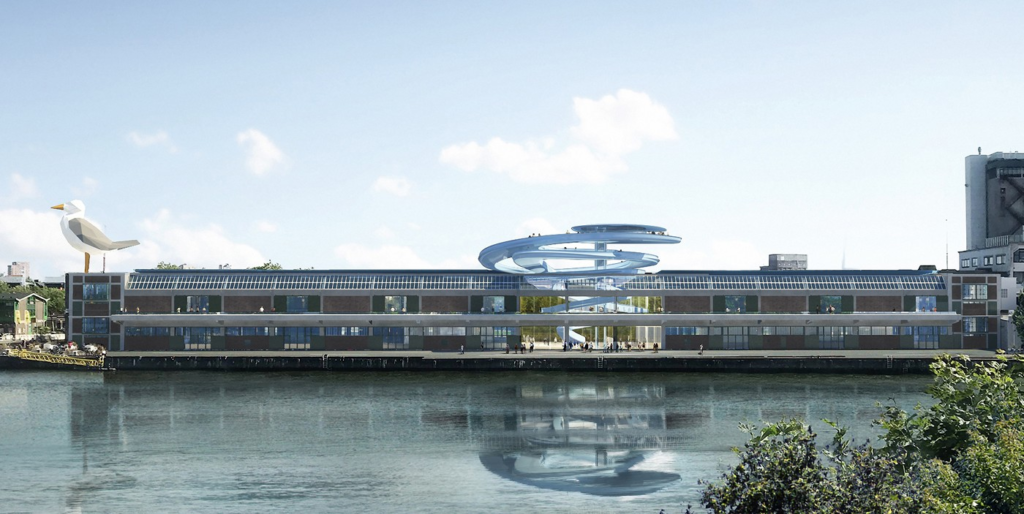
In Rotterdam, at the Fenix Museum of Migration, Yansong’s “Tornado” – a spiral staircase wrapping around the historic warehouse, becomes an emotional and narrative journey: a path where people meet, and where one’s moving shadow conveys the passage of time, as if traversing different lives.
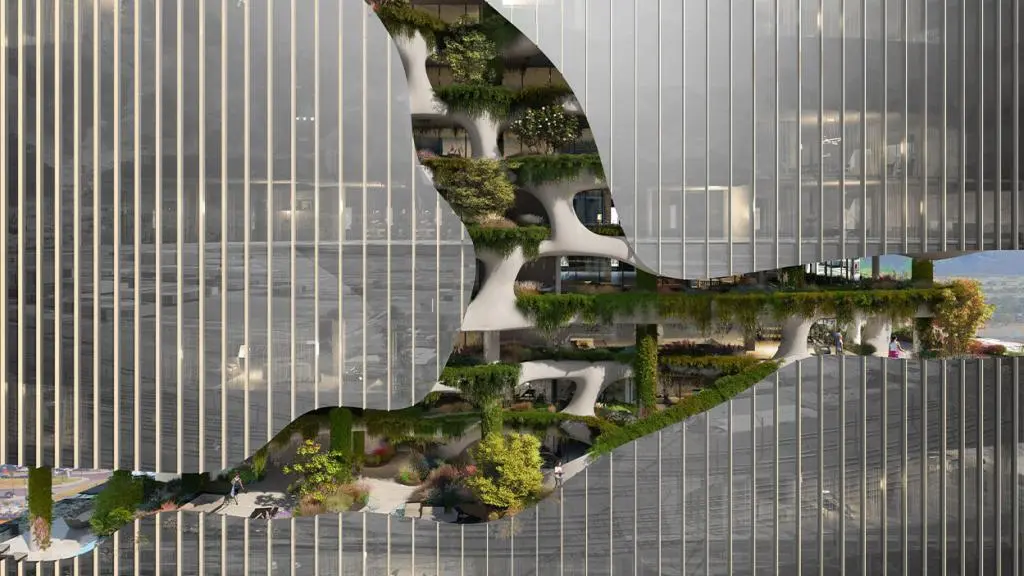
In the United States, with One River North, Yansong introduces a canyon within a modern building: a living crevice climbing vertically, a landscape of stone, water, and light that transforms everyday experience into a journey.
Nothing is decorative: everything is narrative.
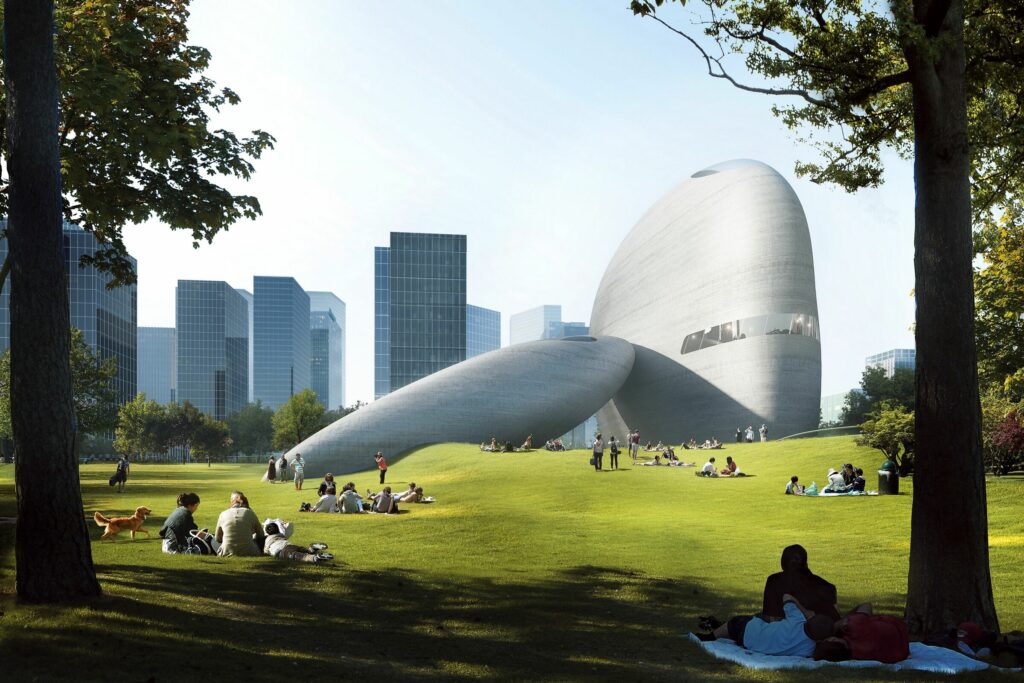
Ultimately, the new Shenzhen Bay Cultural Plaza. A majestic museum that Ma envisioned as an extension of nature within the city: low-lying volumes, large sculptural masses resembling rocks placed in a landscape, and a glass roof that lets natural light reach the lowest levels. From the inside, one can see the sky, the water, and, above all, a park that seems endless, as it flows into and through the museum. The goal was not to construct buildings, but to extend the park by the ocean, creating an open, fluid, and explorative cultural landscape.
Today’s cities are overly flat and uniform, we need a new window for human imagination.
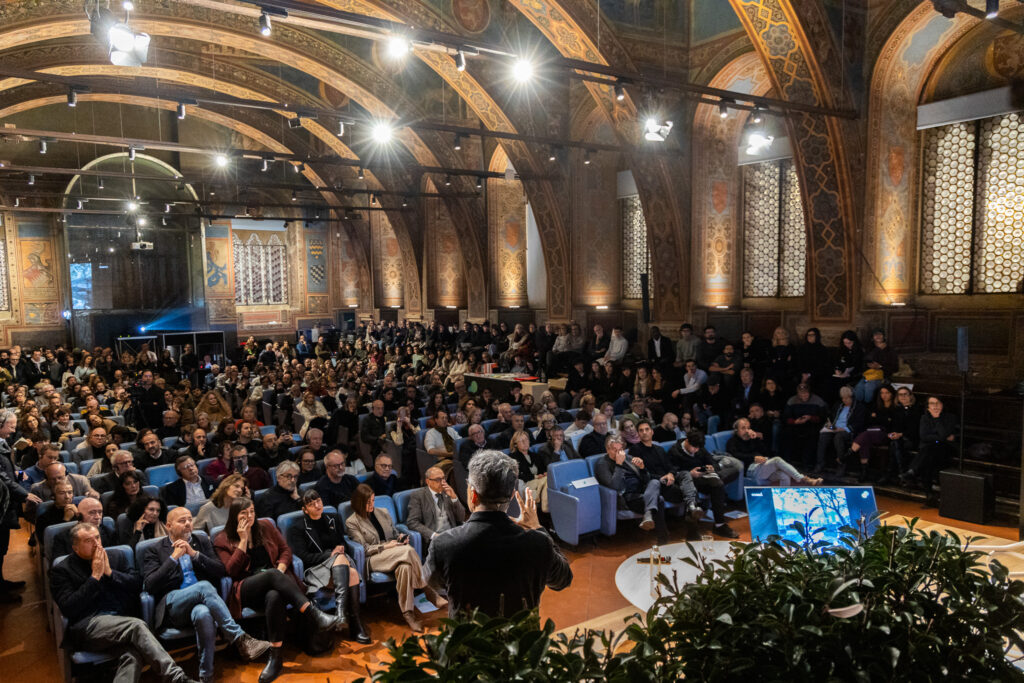
Applying Ma Yansong’s vision on an urban scale means rethinking cities: squares, parks, and buildings that interact with each other, with the Planet and with those who live in them. We need progress that does not consume the past but regenerates it in the present. Sustainability is not a slogan, it is a return to care: first and foremost for communities. Architecture must be a bridge between humans and the World, a way to give shape to our deepest feelings. Imagining the cities of the future means, above all, putting humanity at the core.