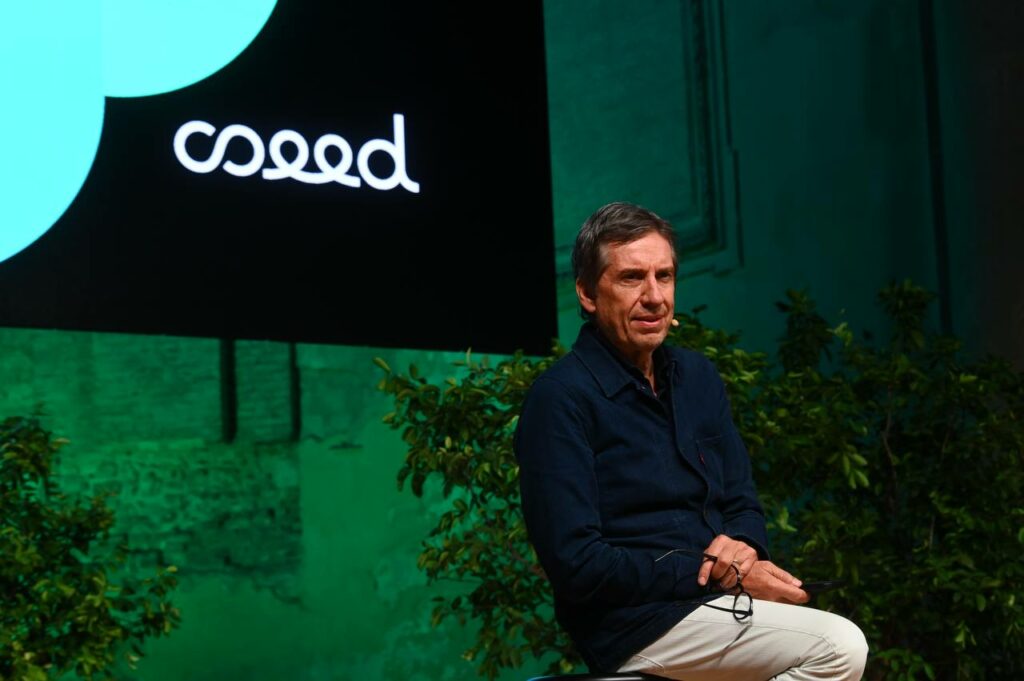

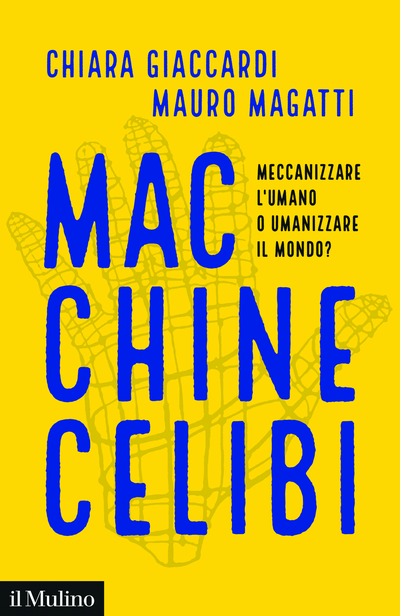
Seed 2026 opens in Perugia with a word that is both a title and a program: Humanity. It is the theme of this edition, and around it scholars and designers will engage along the festival’s four research trajectories. The cultural coordinates for these days are set by the inaugural lecture of Mauro Magatti, sociologist and economist at the Università Cattolica, columnist for Corriere della Sera and Avvenire, who takes as his starting point his latest book, co-authored with Chiara Giaccardi, Macchine celibi. Meccanizzare l’umano o umanizzare il mondo? (“Bachelor Machines: Mechanizing the Human or Humanizing the World?”, Il Mulino, 2025).
His is a gaze that unsettles, yet refuses despair. We must read this historical moment, he says, while also looking for signs of a possible future. Otherwise we end up being needlessly overtaken by discouragement.
READ ALSO: Seed 2026: Design Explores the Future of Humanity in Perugia
Heirs to an extraordinary success
The starting point is counterintuitive. We are the heirs, Magatti argues, of an unprecedented historical season. Since the fall of the Berlin Wall, that is, over the last thirty-five years, the world has grown at a speed never seen before. Hundreds of millions of people, above all in China but not only there, have risen out of poverty. In many respects, an enormous success.
But it is this very success that has led to what is called the polycrisis: a plurality of critical situations we must face at the same time. There is the climate crisis, with the Paris Agreement projections now overturned and a temperature that by the end of the century could have risen by four degrees. There is the geopolitical crisis: every day we hope the situation in Ukraine does not degenerate, because very little would be needed for us to find ourselves, in effect, in an openly declared new world war. There are levels of inequality that would make the Middle Ages shudder, with a few dozen people holding an enormous share of the world’s wealth. There is the difficult coexistence of cultures and religions, and the rise of irrational political forces.
Addicted to growth
What have we done in these decades? We have expanded the possibilities of life for billions of individuals. And it was not religion or politics that did this, Magatti observes: it was the techno-economic system. An idea that is hard to contest, because who wouldn’t want more possibilities? And this is precisely the crux: we have become dependent on this idea, and on a system that must grow ever more efficient to sustain it. We all complain that we cannot keep up with the acceleration. That is the first problem.
The second is simpler, almost banal, and for that reason often forgotten. Life is an organized form that resists entropy, but in doing so it produces entropy of its own. Our growth generates waste: CO2, plastic, but also human waste. It destroys biodiversity and unsettles balances such as those of the climate and of geopolitics. It is a model unable to face the problems it has itself generated.
Technology as pharmakon
How do we find a way out? Not by renouncing technology, but by remembering what it is. In Greek, pharmakon means “curative poison”: technology heals, solves problems, expands possibilities, and at the same time can make us ill and threaten our lives. We know this well with medicines: immense tools, but to be used with care. It is worth recalling Plato, who by writing dialogues founded the Academy in order to recover the encounter that writing risked erasing.
The digital is the medicine of globalization. We cannot do without it: without it we would not be able to organize those billions of individuals who have been activated in recent decades. It gives us levels of efficiency once unthinkable, from logistics to mobility, and it has extended to every sphere of existence the performative logic, that of achieving a goal. There is a considerable difference between being told “get moving, walk” and having a device that tells you: today you took five thousand steps, go and take another five thousand. The digital gives us standards, a word that comes from “standard” in the sense of a banner, the flag planted on the battlefield, and with them the parameters by which we judge our own behavior. The logic of production has entered everyday life.
The other effect is paradoxical: the digital connects us and, at the same time, isolates us. Relationships are many and dynamic, and we are always in debt to all of them. The data say that loneliness is growing: in Milan, single-person households account for 50 percent, and in large cities abroad the share is even higher. A society organized by digital machines is at the same time in full communicative chaos, something the cybernetic engineers had not accounted for. We are losing the conviction that, through the logos, through the word, we can understand one another: we see it in the small and in the large, even in Parliament, born to speak and increasingly less a place where interests talk to one another. The logos is what has held societies together, for better and for worse. The digital is the medicine of liquid modernity: we need it, but it separates us.
Artificial Intelligence, the ripe fruit of reductionism
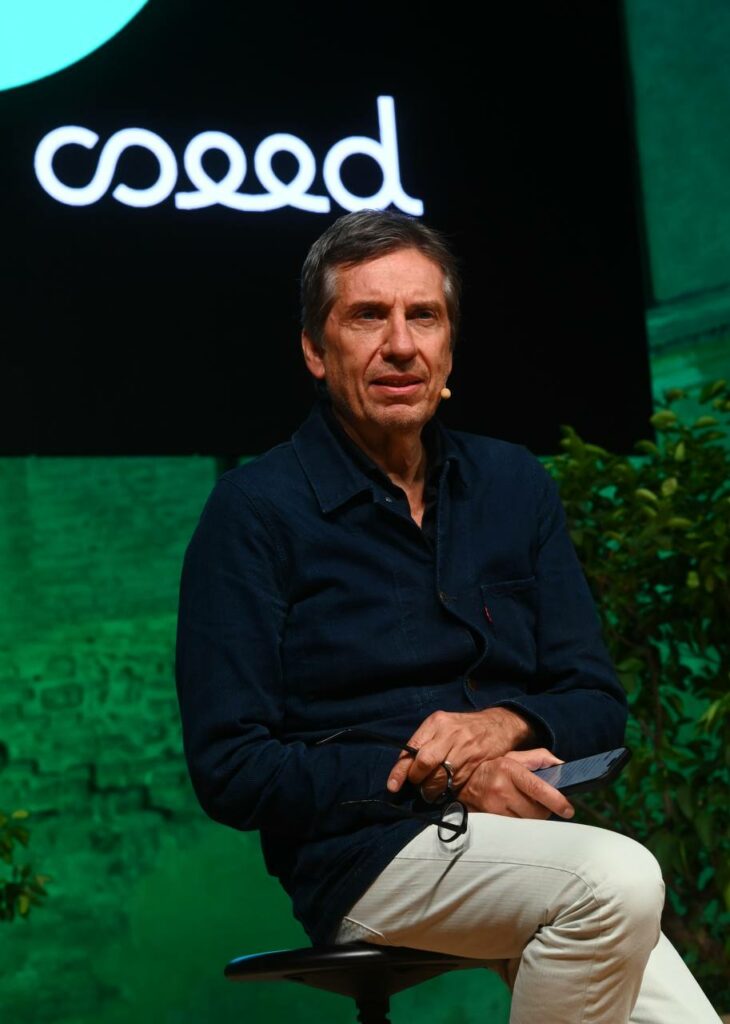
Into this scenario enters a new subject. Artificial intelligence, Magatti suggests, can be thought of as the embodiment of modern reductionism, the very thing that has allowed us to come so far: reason has increasingly narrowed into calculating reason, and now we have built machines that calculate. Large language models associate one word with the next through statistical calculation, but they do not “guess.” For this reason the call is to be wary of simplifications: citing Hinton and Bengio, AI is not a mere statistical game, because it rests on a theory of language and of human communication. According to Hinton’s thesis, these systems would be mimicking some capacities of the human brain.
The problem, then, is not the machine but language, and the conception of language behind it. We can be proud of what we have built. But as powerful as its positive effects are, so are the negative ones: it is an extremely potent medicine. And the threat, he warns, would come not from the “wickedness” of machines but from how we have built them. It is a real risk that we must at least name and consider: that AI threatens life.
What does “More Life” mean?
We thus come to the central question. If it is right to expand the possibilities of life, what does “more life” mean? Does it concern each individual human being or all of us together? Human life alone, or also that of the environment? Is it only an increase in possibilities, or does it have to do with meaning, with thinking, imagining, creating, and not only with multiplying and accelerating?
Magatti’s answer starts from something concrete: life is a body, an organism, a negentropic form that resists entropy and stands in close relation with what surrounds it. For over a century, science has told us that no form of life on Earth exists without ties to what came before, to what surrounds it, and to what comes after. Life is relational, intelligent, creative, capable of action. If we understand it this way, we need a more evolved idea of the human being.
In the age of the digital and the artificial, the question will be that of the living. We must decide, as humans, whether we want to keep this experience alive: a limited life, one that has to do with death, with affection, with the capacity to care, and which for this very reason is precious and unique.
Two images help to say what human thought is. Kant’s, the starry sky above me: human beings think because they feel emotions and ask existential questions. And Lévinas’s, which goes further: the face of the other before me, whom we recognize, whom we love, and before whose pain we ask ourselves questions.
These are the dimensions that characterize human intelligence.
From here comes the final indication, more practical than theoretical: to recreate contexts in which there are not only possibilities, but relationships and the possibility of being different. Workplaces and organizations in which collective intelligence can develop and grow.
It is the thread that ties the lecture to the very meaning of a festival like Seed: a place where scholars and designers meet. “What does more life mean?” is, in Magatti’s words, the prompt for everything that will be discussed in these days. A question that, for an edition titled Humanity, is perhaps the most honest way to begin.